
Lessons from an Opossum
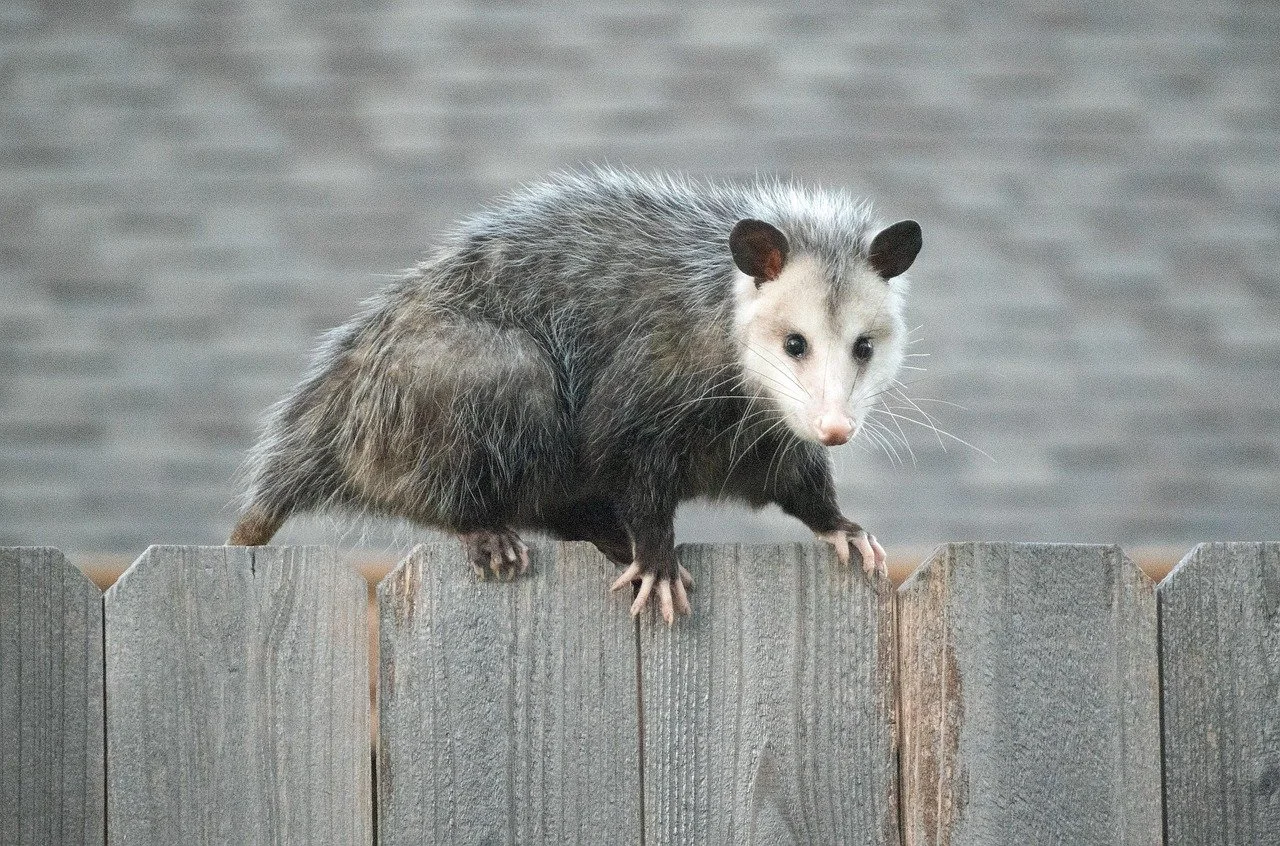
(An opossum, Didelphis virginiana, perched on a fence. Not the actual Jeph.) Photo by Nature Inspires on Pixabay
Recently, we had a little opossum visitor to the Hermitage. He showed up one night, and we watched him snack on a bit of food that we think our dog or one of the cats might have dropped on the porch. Felix the Forest Dog, and Jupiter and Nebula, the Forest Cats, were fascinated by this little guy, and so were we! We named him “Jeph,” after a TikTok famous opossum—yes, that really exists!
I know that opossums are controversial. Many people that I meet at the Forest say they think opossums are ugly, or mean, or dirty animals. My usual response to that is to think, well, so are humans, sometimes! Here are some opossum facts, to help you get acquainted with this little Forest friend:
They are North America’s only marsupial—related to kangaroos, koalas, and the Australian possum, which is a different species.
They eat bugs—not just the dreaded ticks that we see in the summers, but cockroaches and other invasive critters that lurk beneath the Forest canopy.
They’re resistant to most snake venoms.
They’re nocturnal, and usually solitary, quiet animals who tend not to bother humans if they can avoid it.
They’re synanthropes—they benefit by close proximity to humans (one of the reasons we have to make sure all our outside trash can lids are on tightly!)
They “play possum,” or go into a rigid state that looks like they are dead, to avoid predators.
Like them or love them, they are some of our Forest residents, and we do see them regularly around here.
So, why write a blog post about opossums? Well, many of those who have visited the Forest in the last two years will know that I am a big fan of the opossum, and there are a few lessons that I’ve learned from them that I think are relevant to us humans, especially as we enter into the winter season.
Opossums move at their own pace. They don’t tend to rush (they’re usually too full from eating to accomplish that!) and they prefer to hide or play possum rather than get into a fight with a predator. When was the last time you “played possum”? By that, I mean, when did you last deliberately slow down, set aside the busy-ness of life, and just be present to the Forest, or to whatever creation is around you? Perhaps we could all use some “possum time” every now and then to reset and recharge our batteries.
Opossums take what they can get in life. Yes, that technically means that they are scavengers sometimes, but it also means that they are highly adaptable, and will find food sources or shelter wherever they can. My mom used to say when we sat down at the dinner table, “You take what you get, and you don’t throw a fit.” Are you happy with what you have in life? If not, why not move on to something different, or change perspective? A visit to the Forest often helps people to reset their mindset away from one of scarcity and fear to one of abundance and hope.
Opossums don’t seem to be bothered about how they are perceived by others. In other words, most opossums of a certain age are pretty rotund, because they eat and eat and eat as much as they can. Maybe not the healthiest advice for us, but what I think we can learn from them is that they don’t seem to bother that some people, and even other animals, see them as scary, or overweight, or weird (I swear, I’m not just talking about myself here!) Opossums are who they are, and isn’t that what all of us would like to be—just ourselves?
I happen to love opossums, and if you don’t, that’s o.k. We can still be friends. But the next time you see an opossum, whether here at the Forest or hanging around a local trash can, give a thought to what he or she might be able to teach you, just like all of sacred nature can teach us—to be ourselves, which is the best gift we could ever give ourselves, and the world.
Yours in Peace,
David